Blog
Defending the power of our states since 2009

Lavish parties, flashy cars, waterfront mansions … money is no object for Jay Gatsby in F. Scott Fitsgerald’s classic novel. We are familiar with this image of conspicuous consumption, where prices are ignored, unspoken, even disdained. I wrote this week for The Daily Signal about the uncanny similarity of all this to American healthcare.
Americans have been trained to put up with little to no meaningful information when it comes to healthcare prices. At least before treatment. When the bill comes due, it’s meaningful enough to put many Americans into financial straits. Why is this?
One obvious reason is that health care executives want to maximize revenue. Prices invite questions about relative value. They make it possible to shop around. Even more obviously, … they serve as an agreement that protects customers. …
Without true prices, there is no financial certainty for people making health care decisions—except that they’ll be held responsible for the final bill. This puts patients at a real disadvantage, especially when a bill has errors or unexpected fees, since the charges are unknown until after services are provided and the bill is due.
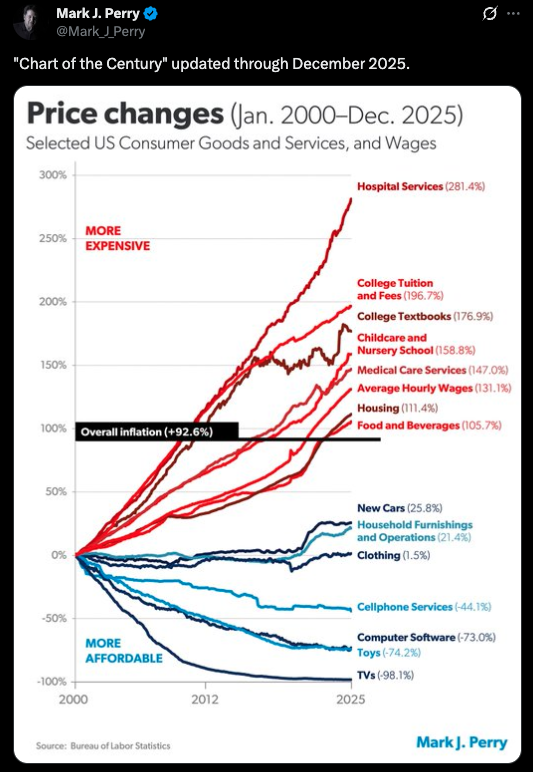
Thankfully, the Trump Administration believes that patients have a right to real price information before treatment. This should be a top priority in a time when medical inflation is out of control, as illustrated in this recent post by economist Mark Perry. While healthcare policy can be complex, this one isn’t. Patients deserve to see real prices before making decisions about care.